Restart after disinfection
Disinfectant residues in pipework can pose a risk at restart.
October 2026
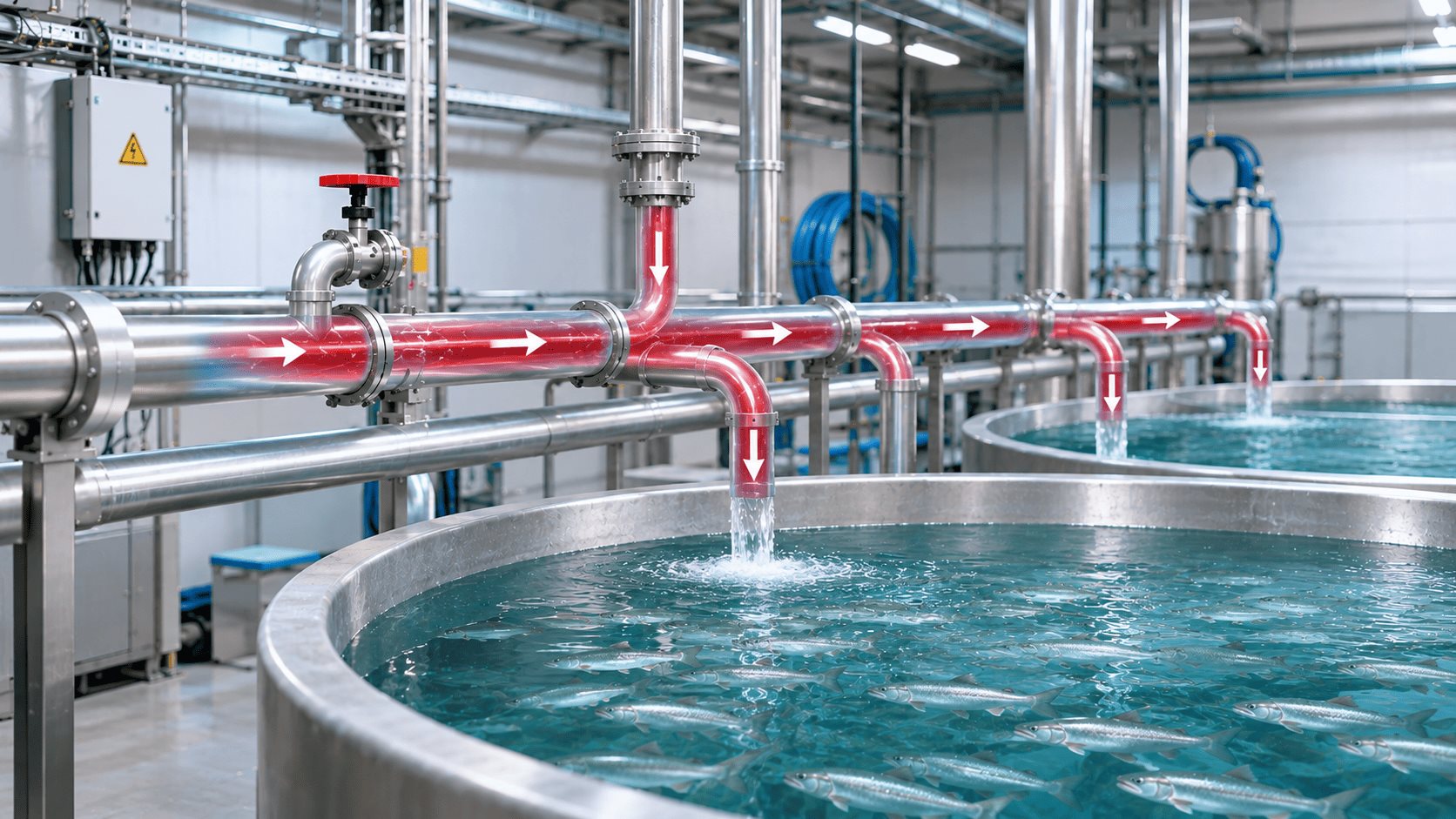
After disinfection, disinfectant residues can remain in pipes that have not been sufficiently drained or flushed. When water flow through these pipes resumes, the residues can be carried into, for example, the fish tanks.
An incident at a hatchery
On 29 January 2026, LandbasedAQ reported extensive mortality at a hatchery. The operator stated that it had decided to cull additional fish because their prognosis was uncertain.
The operator’s working hypothesis was that residues of a peracetic acid-based disinfectant in the pipe serving a standby oxygen cone may have entered the water supply to some fish tanks. At the time of publication, the operator was also considering other possible causes.
Biofilm and disinfection efficacy
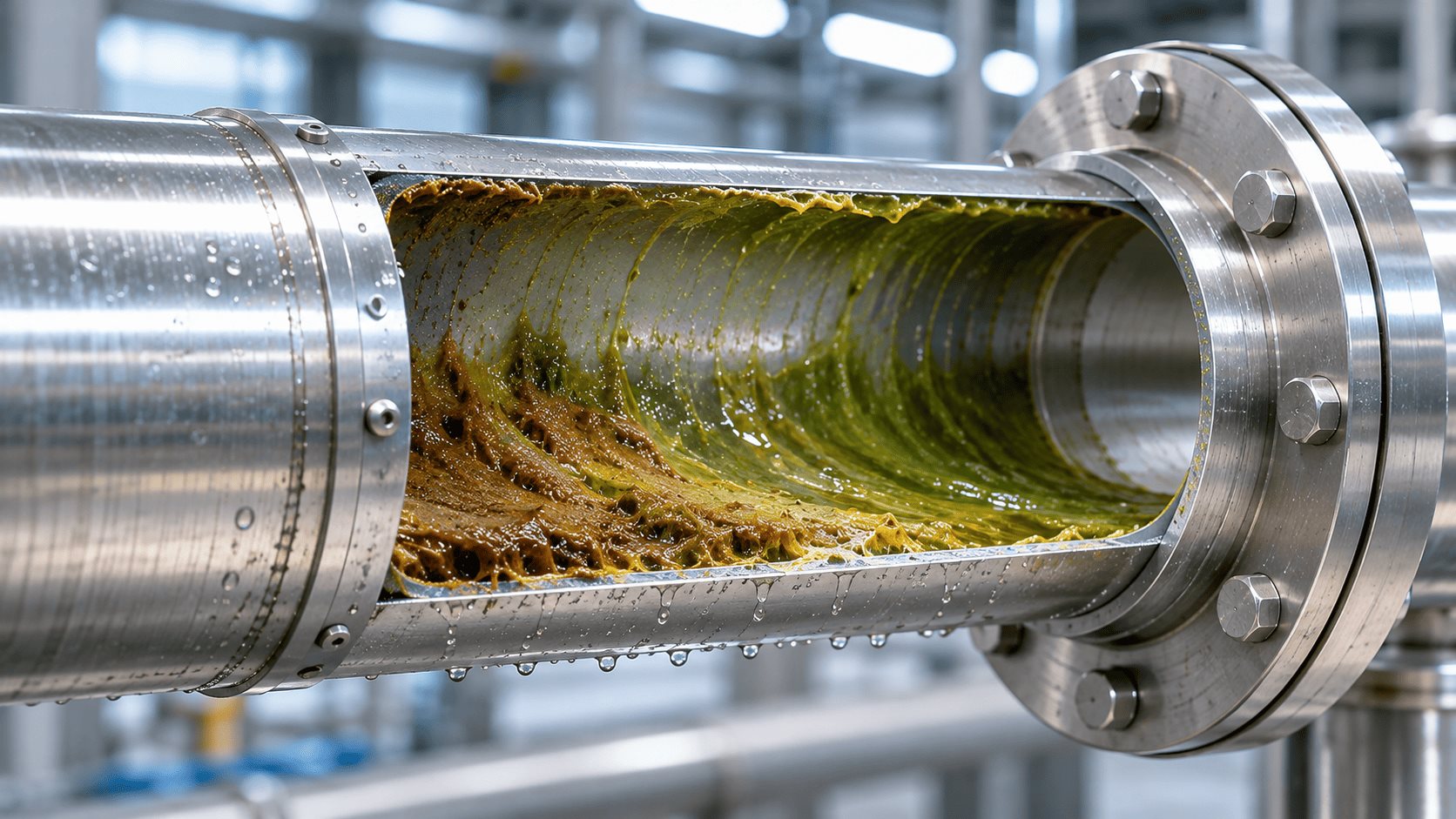
Organic material and biofilm can limit contact between the disinfectant and the bacteria. For oxidising agents, reactions with organic material can also reduce the amount of available active substance. Efficacy is therefore influenced by how thoroughly surfaces have been cleaned, as well as concentration, pH, temperature and contact time. Even when the bacteria are inactivated, parts of the biofilm layer can remain and provide a basis for new growth.
Residue checks must cover the entire piping system
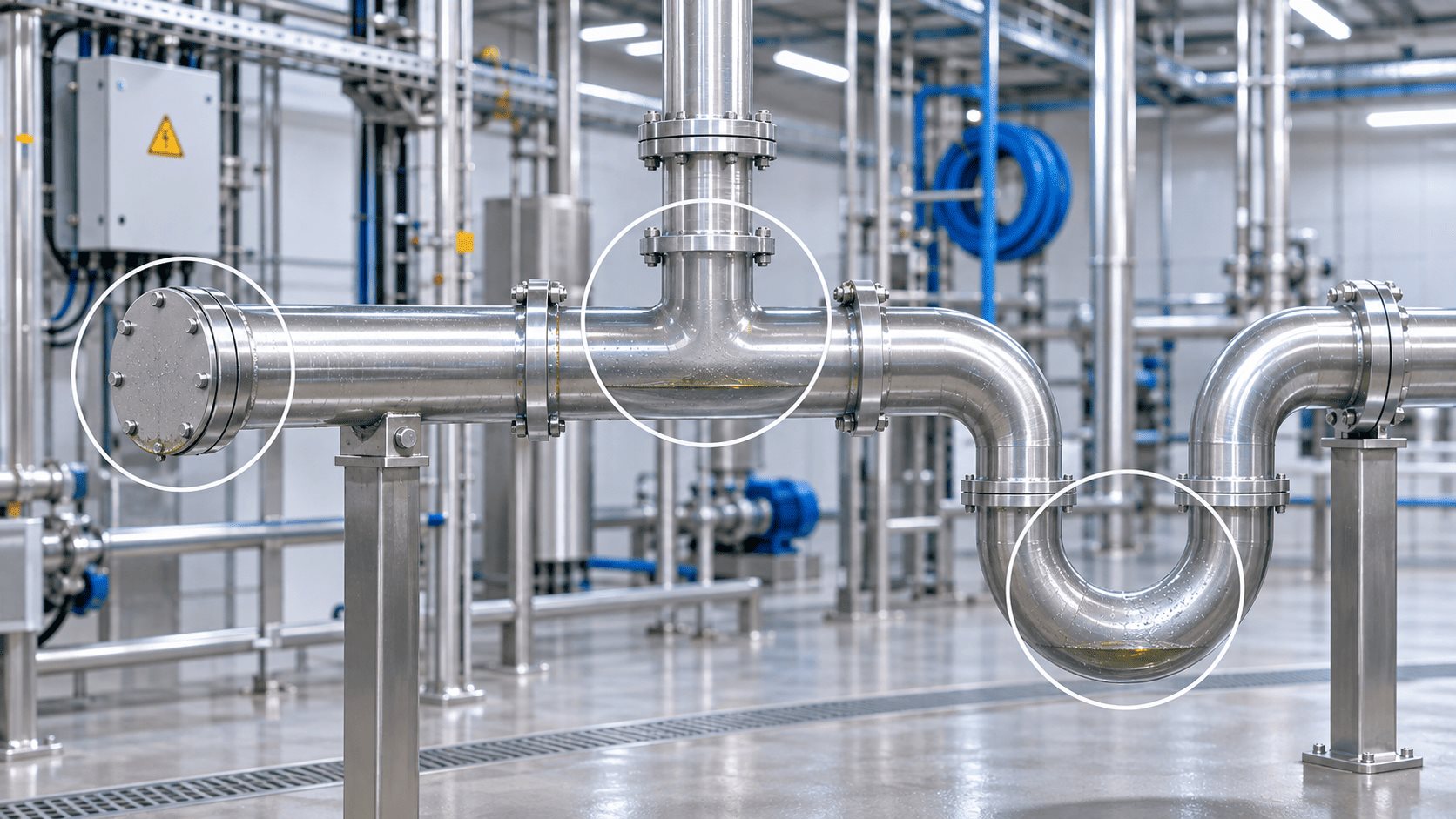
Disinfectant can remain in dead legs, low points and isolated branches after the main line has been flushed. When these sections are brought back into service, residues can be carried directly into the fish tanks. A sample from the main line therefore does not demonstrate that the entire system is ready for restart. Residue checks must cover pipe sections exposed to the disinfectant, with sampling that captures water from these points. The test must be able to detect disinfectant residues at levels that could harm the fish, and the result is assessed against the limits set for a safe restart.
Oxitrate from cleaning to disinfection
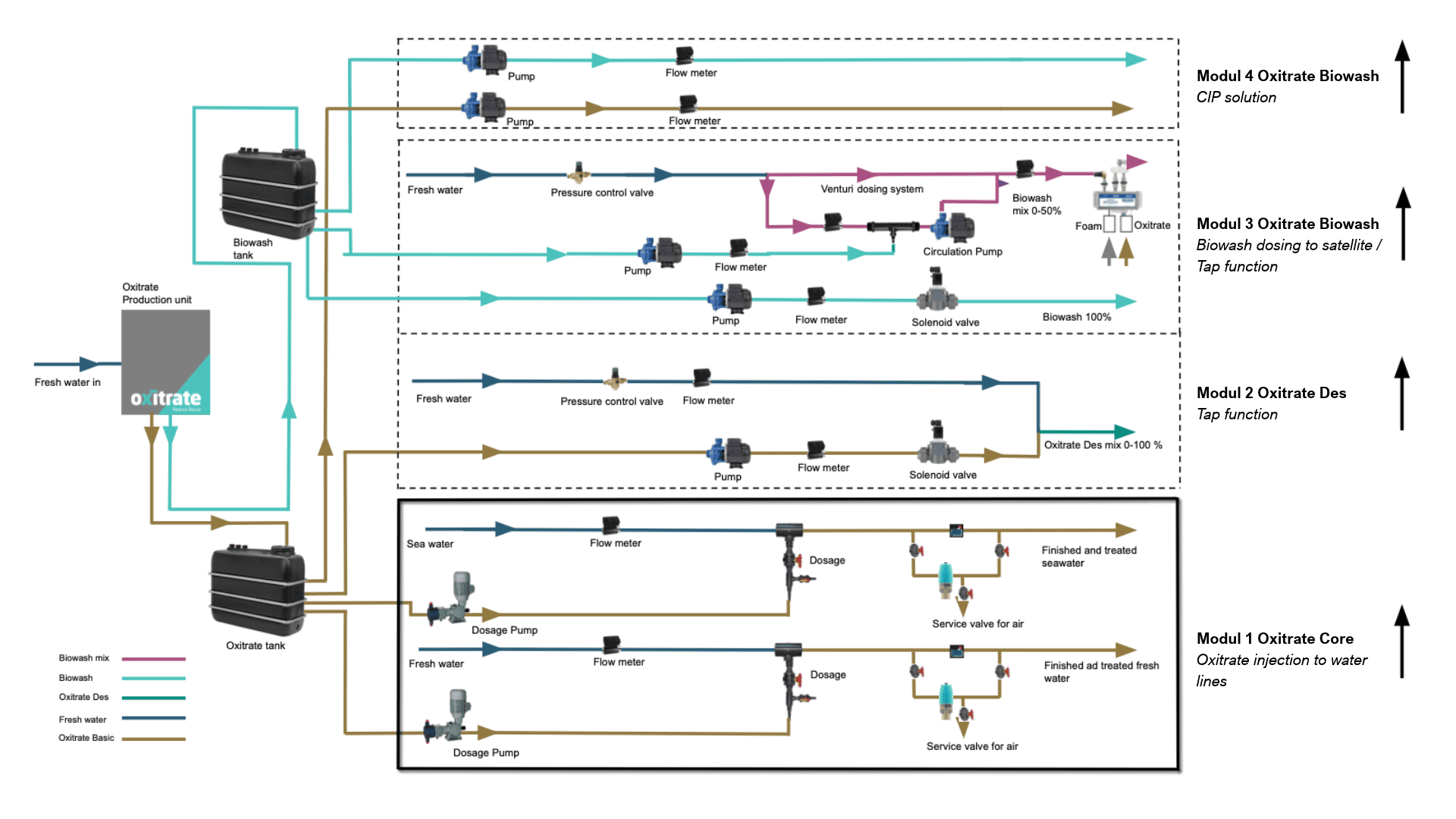
Oxitrate combines on-site production of cleaning and disinfection solutions with equipment adapted to the facility’s cleaning setup. Three modules from our range of solutions are particularly relevant to the issue raised in the article.
- Module 3 - Biowash is used for alkaline cleaning before disinfection to remove dirt and organic material.
- Module 2 - Oxitrate Des is used to disinfect cleaned surfaces and equipment. The active HOCl solution has a bactericidal effect.
- Module 4 - CIP is relevant where the internal surfaces of pipes and equipment need to be cleaned and disinfected without dismantling.
For all solutions, the facility’s risk assessment forms part of the basis for residue checks before restart.
Review of the existing installation
A technical review with Oxitrate can focus on one at-risk section of pipework. Together with operations and quality teams, we assess cleaning and disinfection, access to branches, drainage and relevant sampling points before restart.
Sources: Therese Soltveit, LandbasedAQ, 29 January 2026. Nofima, guidance on Listeria and biofilm.